The History of Car Tuning — From the First Hot Rods to Modern Chip Tuning
Car tuning isn't a modern phenomenon. From the very early decades of motoring, enthusiasts were trying to extract more power, improve looks, and personalise their vehicles. Here's the full story.
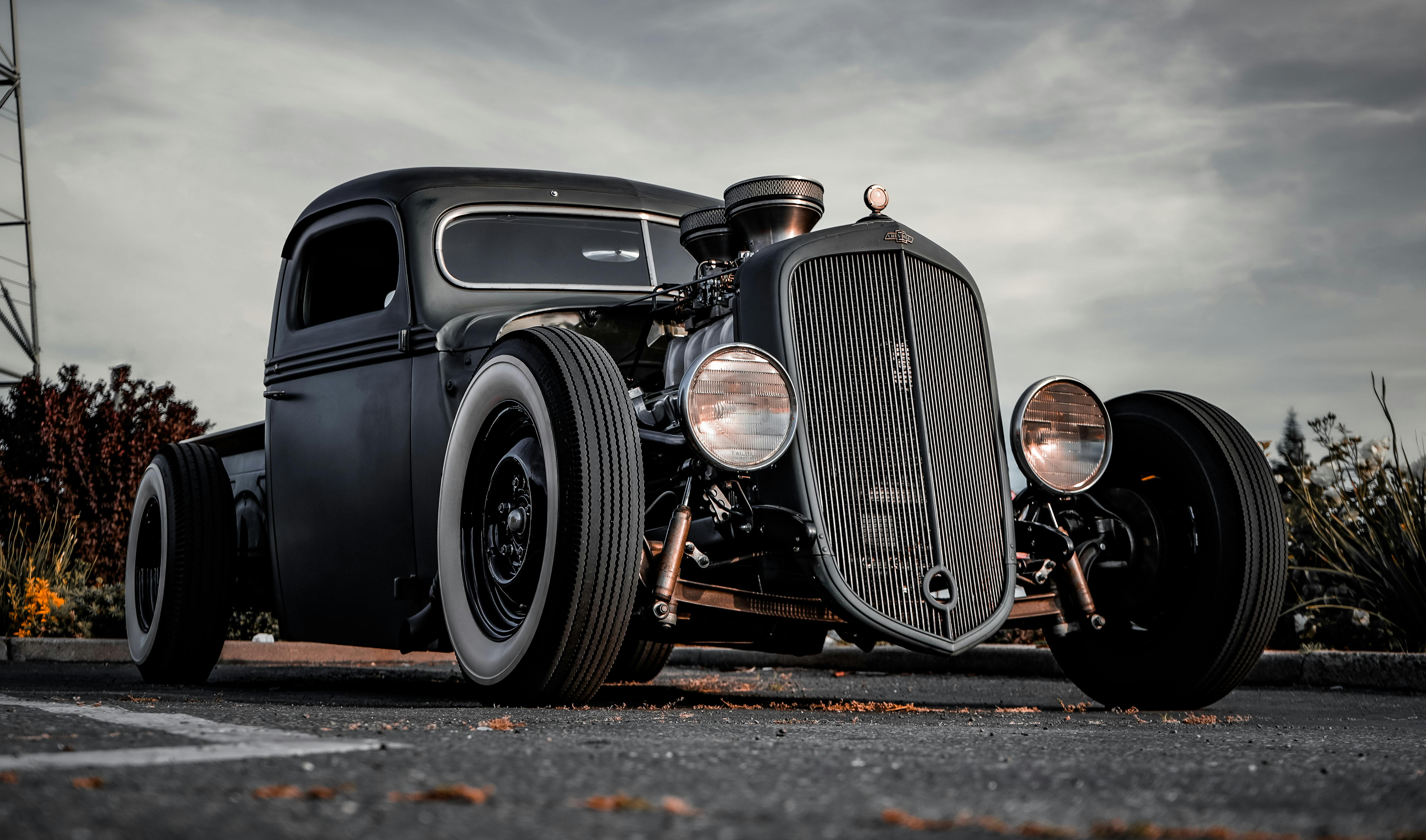
01. Origins — Hot Rod Culture of the 1940s
The story of tuning begins in America in the post-World War II era. Young veterans, full of energy and adrenaline, started buying old Ford models from the 1930s and 40s — cheap, accessible, and mechanically simple cars — and transforming them into something far more exciting.
These enthusiasts, known as "hot rodders", would pull out original engines and install larger, more powerful units. They stripped away unnecessary body panels to reduce weight. They lowered the ride height. The result was vehicles with incredible performance for the era, tested on dry salt flats like Bonneville Salt Flats in Utah.
Hot rod culture quickly became a social phenomenon. Clubs were formed, races organised, and in 1948 the National Hot Rod Association (NHRA) was founded — an organisation that still exists today and runs some of the world's biggest drag racing events.
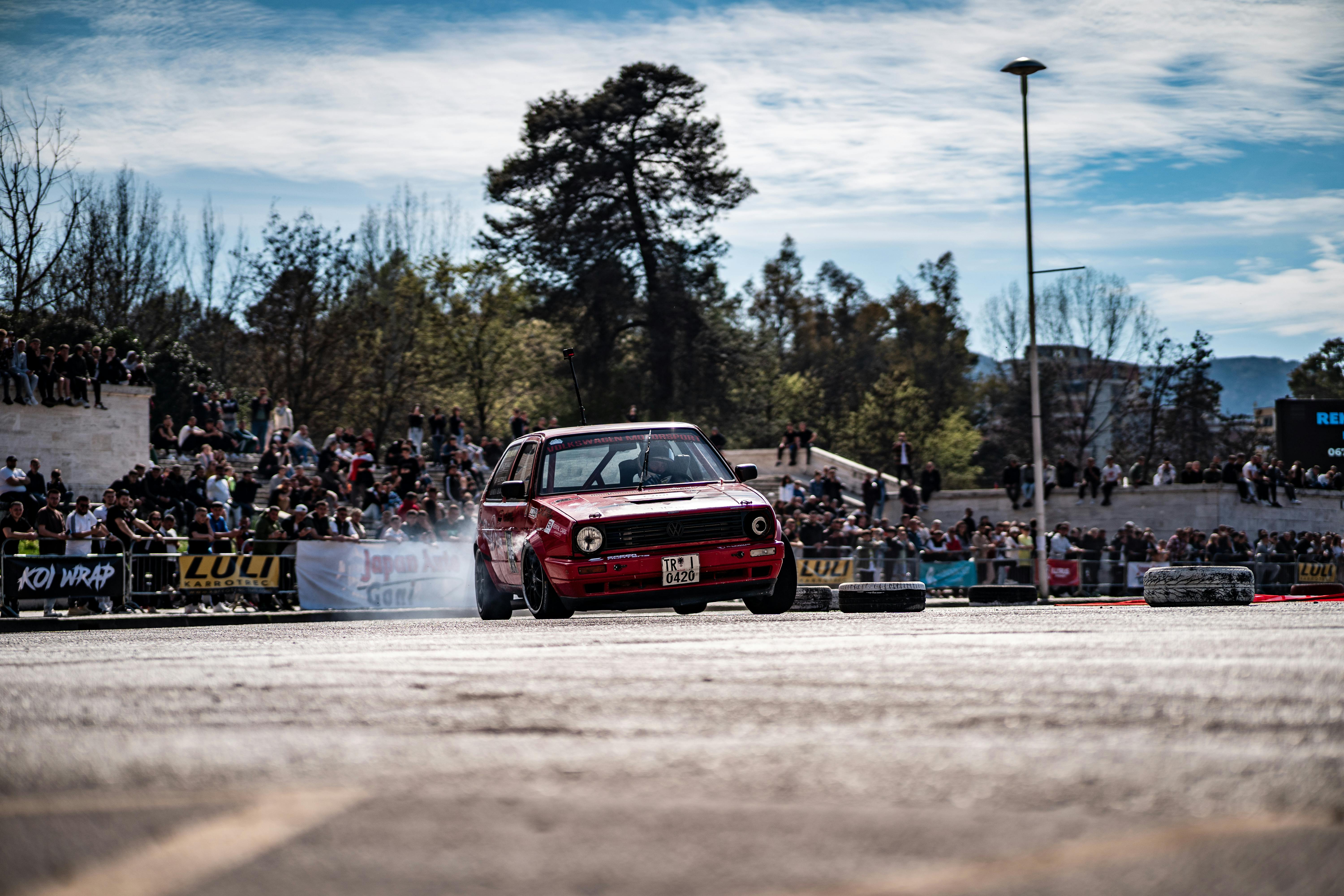
02. Europe — Rally and the GTI Revolution
While America was developing hot rod culture, Europe was taking a different path. Here, tuning was strongly tied to motorsport — particularly rally racing that took place on public roads through forests, mountains, and towns.
The culmination of European motorsport was Group B in the World Rally Championship in the 1980s. This class of cars with virtually no technical restrictions produced vehicles with 500+ horsepower, four-wheel drive and incredible acceleration. The Audi Quattro, Lancia Delta S4, Peugeot 205 Turbo 16 — cars that forever changed the perception of what was possible.
On the streets, the Volkswagen Golf GTI, launched in 1976, democratised high performance. Cheap, practical, and surprisingly fast — the GTI became the bible of European street tuning. It was followed by the Peugeot 205 GTI, Ford Sierra RS Cosworth and BMW E30 M3, cars that defined a generation of enthusiasts.
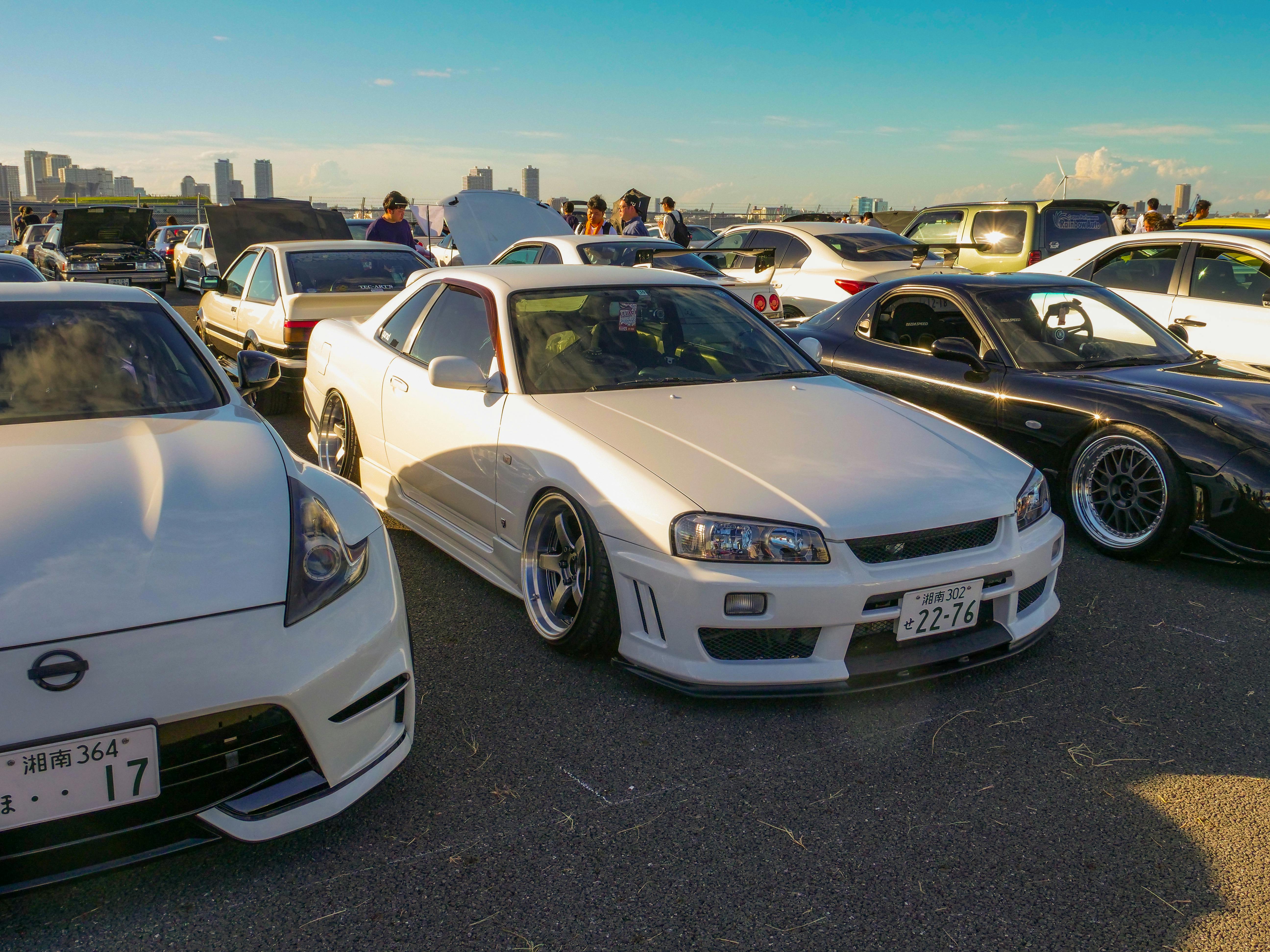
03. Japan — JDM and Bosozoku
Japan developed an entirely unique tuning culture. It began with the Bosozoku movement in the 1970s — groups of motorcyclists and drivers who modified their vehicles in extreme visual ways. Massive spoilers, extremely lowered vehicles, extended exhaust systems — an aesthetic that was deliberately provocative.
In the late 1980s and 1990s, Japan gifted the world some of the most legendary cars in tuning history. The Nissan Skyline GT-R (R32, R33, R34), Toyota Supra MK4, Mazda RX-7 FD, Mitsubishi Lancer Evolution, Subaru Impreza WRX STI — cars that were exceptional in standard form and became a completely different level with tuning.
The manga and anime series Initial D (1995) brought drift culture to a global audience, popularising the Toyota AE86 and the idea that driving skill can beat a more powerful car. Drifting soon grew into a global sport.
Japanese JDM (Japanese Domestic Market) cars became sacred objects for tuning enthusiasts worldwide — illegally imported, waited years for, paid premium prices. The name "JDM" alone carried an aura of authenticity and quality.

04. Pop Culture — Fast & Furious and Need for Speed
No medium had a greater impact on global tuning culture than the 2001 film The Fast and the Furious. Director Rob Cohen and producer Neal Moritz created a film that was more than an action spectacle — it was a love letter to tuning culture.
Brian O'Conner's orange Mitsubishi Eclipse, Dominic Toretto's 1970 Dodge Charger, neon underglow, NOS systems, vinyl wraps — the film was an encyclopaedia of late-90s street tuning aesthetics. Sales of Honda Civics, Acura Integras and Mitsubishi Eclipses exploded immediately after the premiere.
In parallel, video games played a crucial role. Need for Speed: Underground (2003) was a turning point — players could for the first time customise their own vehicles in detail: body kits, neon lights, vinyl wraps, wheels, nitrous oxide. Millions of players learned tuning terminology through this game.
Underground 2, Most Wanted, Carbon — each NFS sequel brought a new generation of fans. Gran Turismo on PlayStation approached tuning more seriously, simulating real performance modifications. These games raised generations of future tuning enthusiasts.

05. The Digital Revolution — Chip Tuning and ECU Remapping
Modern vehicles are essentially computers on wheels. The ECU (Engine Control Unit) controls every aspect of engine operation: fuel injection, ignition timing, turbo boost pressure, rev limiters. And that's exactly where the new frontier of tuning lies.
Chip tuning, or ECU remapping, involves modifying the software that controls the engine. Instead of physical modifications, you simply connect a laptop to the car's OBD port and upload new parameter maps. The result? A 15-30% power increase without opening the engine. A BMW 320d with a standard 190hp can easily reach 230+ hp. A VW Golf 2.0 TDI with 150hp — 190+ hp.
Manufacturers deliberately limit performance for commercial reasons — the same engine with different software is sold as a "more powerful version" at a higher price. Chip tuning "corrects" this. Of course, this comes with responsibilities — warranty, reliability and legal regulations are factors to consider.
06. The Balkan Scene — Creativity Born of Necessity
The Balkan tuning scene has its own special story — a story of creativity born out of limited resources. While Western European enthusiasts had easy access to expensive aftermarket parts, Balkan tuners had to be more inventive.
Local craftsmen became renowned for their ability to achieve maximum results from minimal resources. Volkswagen Golf II and III, BMW E36 and E46, Peugeot 306 — these vehicles are the foundation on which an entire generation of regional tuning enthusiasts was built. It wasn't unusual to see a Golf II with an M3 engine or a Citroën Saxo with a turbo conversion.
Night cruises through city streets, summer car shows, spontaneous meetups in car parks — tuning in the Balkans has always been more than a hobby. It was a form of communication, an expression of identity, part of growing up. Today the regional scene thrives, and projects from BiH, Serbia, Croatia and Slovenia regularly appear at international exhibitions.
07. The Future — Electric Vehicles and New Forms of Tuning
The electric revolution poses new challenges for tuning culture. At first glance, EV vehicles can't be "tuned" in the traditional way — there's no engine to rebuild, no turbo to upgrade. But the reality is different.
Tesla has for years been selling the same car with different software "keys" that unlock more power. Customers who pay a premium get better software, not better hardware. This is a chip tuning concept — just now from the manufacturer itself. Aftermarket solutions for EV vehicles are developing rapidly: battery upgrades, software unlocks, suspension and brake modifications.
The culture remains the same. As long as there's a car and a person looking at it thinking "what would I change here" — tuning culture is alive and won't disappear. Only the platform changes.
From the Garage to a Global Movement
Tuning began as subversion — young people who couldn't afford sports cars found a way to build them themselves. From that necessity and creativity, a global movement was born that today is worth billions of euros.
From hot rods at Bonneville to Nissan GT-Rs at the Nürburgring, from VW Golfs in Balkan garages to Teslas with software upgrades — the thread connecting all of it is the same: love of the car and the constant desire to make it better.